Most Turo hosts ask “should I go independent?” as if it were one big leap. It isn’t. It’s a number you can work out, and at five cars that number usually says something more useful than “quit Turo”: start taking some bookings yourself, and know exactly what each one is worth.
Here’s the math for a typical five-car fleet, using the same assumptions as our Turo fee calculator, so you can plug in your own numbers afterwards.
Why five cars is the point to do the math
With one or two cars, a slow month or one car in the shop swings everything, and the fixed costs of running a direct channel weigh heavily. By five cars you have steady demand, repeat renters and enough volume that a few hundred dollars a month matters. It also lines up with what we see in our own customer data: operators with five or more vehicles are far more likely to still be renting a couple of years later than those with fewer.
The fleet in this example
| Assumption | Value |
|---|---|
| Cars | 5 |
| Daily rate | $100 |
| Rented days per car, per month | 15 (about half the month) |
| Average trip length | 3 days, so about 25 trips a month |
| Trip revenue per month | $7,500 |
What Turo keeps from that month
Turo’s US earnings plans pay you 70%, 80% or 90% of the trip price, and the higher your share, the more damage you carry per incident. On $7,500 of trips:
| Earnings plan | You keep | Turo keeps | Turo keeps per year |
|---|---|---|---|
| Keep 70% · $250 damage | $5,250 | $2,250 | $27,000 |
| Keep 80% · $1,500 damage | $6,000 | $1,500 | $18,000 |
| Keep 90% · $2,750 damage | $6,750 | $750 | $9,000 |
The same month, booked direct
Booked on your own site, you keep the whole trip price and pay three things instead:
| Direct cost | Per month |
|---|---|
| Card processing (2.9% + 30¢ per trip) | $225 |
| Your insurance ($9 per rental day, an episodic-coverage estimate) | $675 |
| Booking software (Fleetwire Basic, 5 vehicles) | $34 |
| Total, about 12.5% of revenue | $934 |
That leaves $6,566 of the $7,500. Against each Turo plan:
| If every trip were direct | Difference | Per year |
|---|---|---|
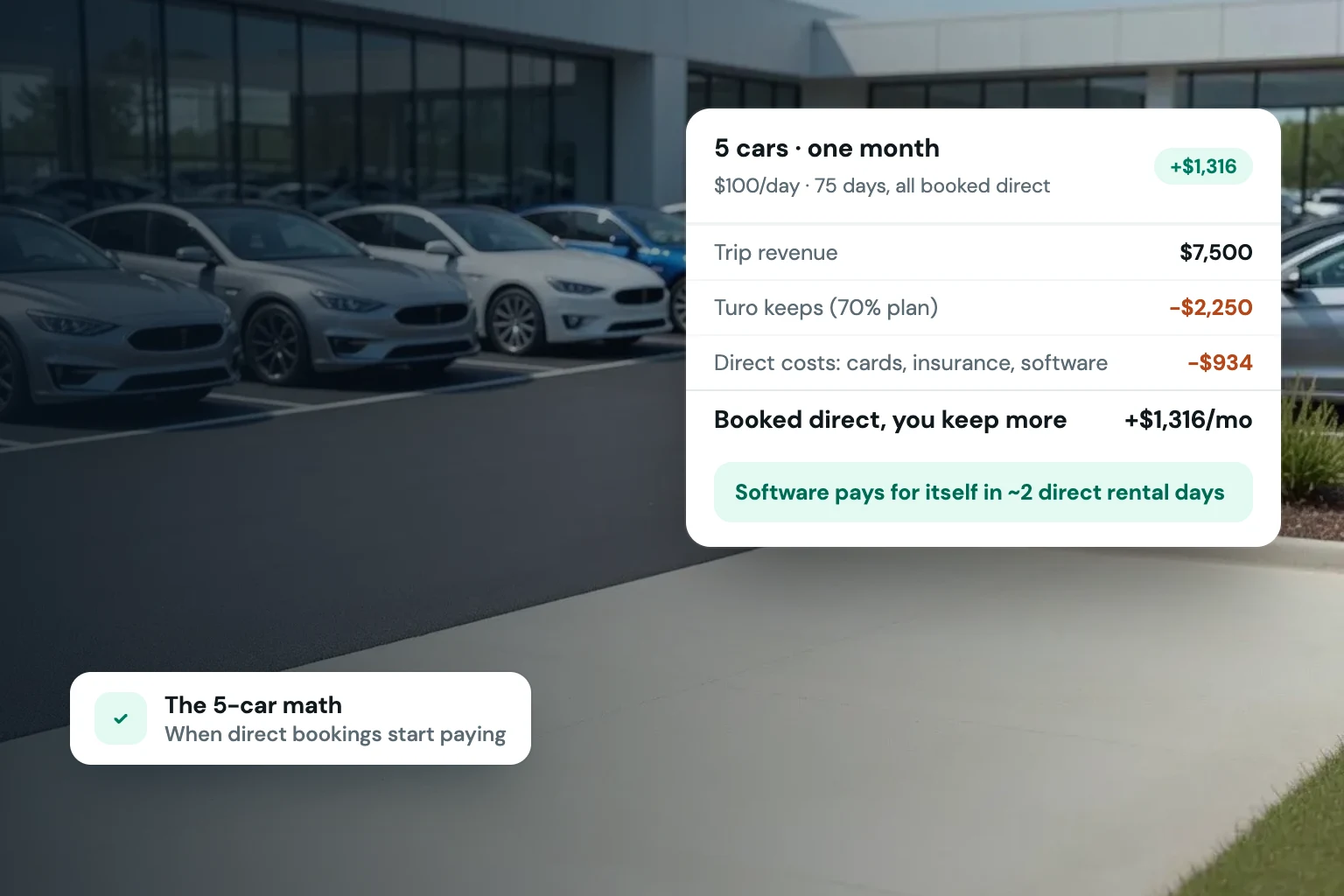
| vs. Turo 70% plan | +$1,316/mo | +$15,792/yr |
| vs. Turo 80% plan | +$566/mo | +$6,792/yr |
| vs. Turo 90% plan | −$184/mo | −$2,208/yr |
You won’t book everything direct, so look at one rental day
Nobody moves a whole fleet off Turo overnight, and you shouldn’t try. The more useful number is what each rental day is worth when it comes in direct instead. A direct day costs about $12 in card fees and insurance at $100/day:
| Your Turo plan | Turo keeps per day | Each direct day saves | Software pays for itself after |
|---|---|---|---|
| Turo 70% plan | $30 | +$18 | about 2 direct days a month |
| Turo 80% plan | $20 | +$8 | about 4 direct days a month |
| Turo 90% plan | $10 | −$2 | never, on fees alone |
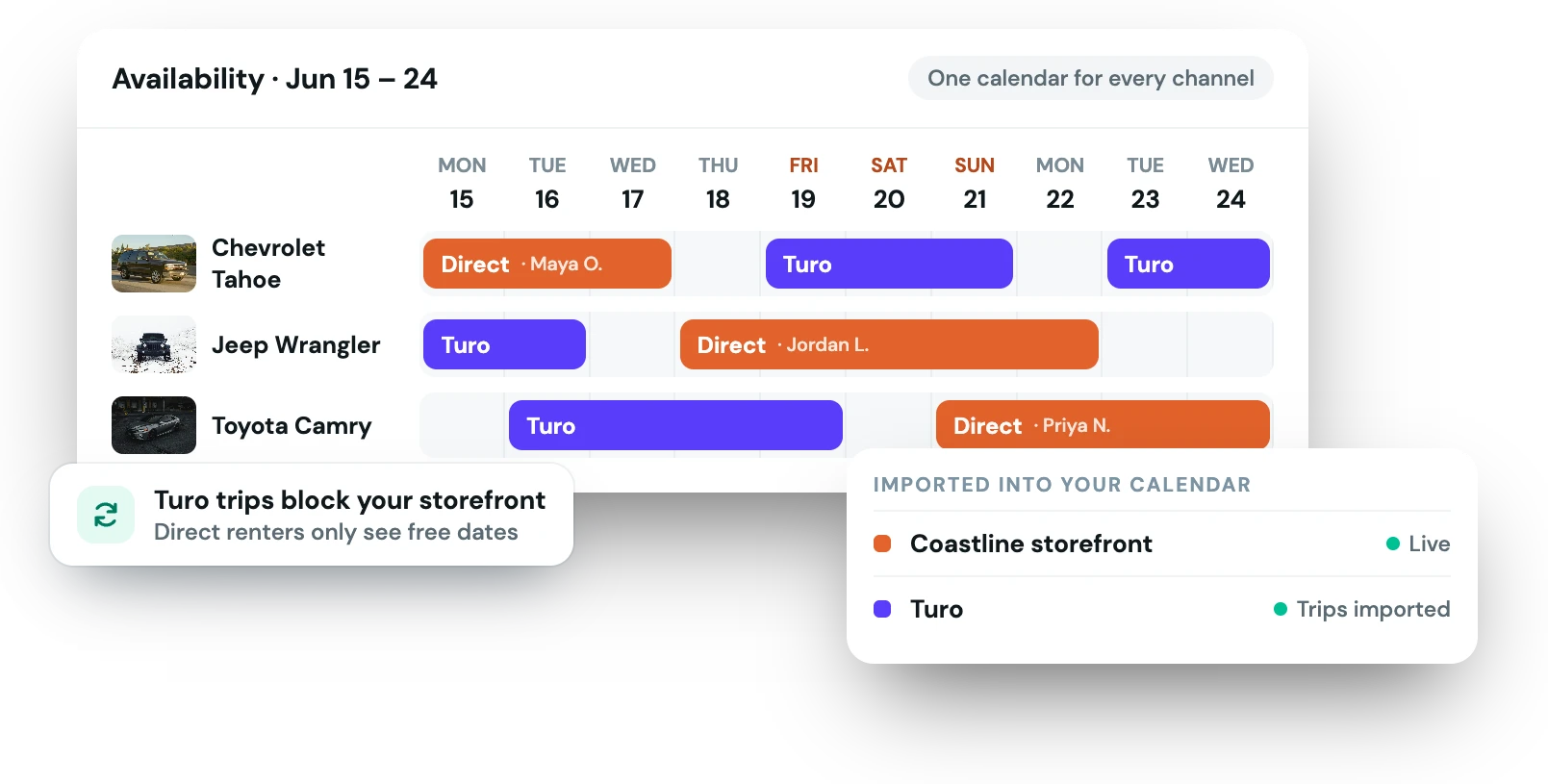
The 5-car takeaway: on the 70% plan, moving just one car’s worth of trips (15 rental days a month) to direct bookings is worth about $236 a month, or $2,832 a year, after software. On the 80% plan it’s about $86 a month. The direct channel doesn’t have to replace Turo to pay; it has to catch your repeat and local renters.
The exception: the 90% plan
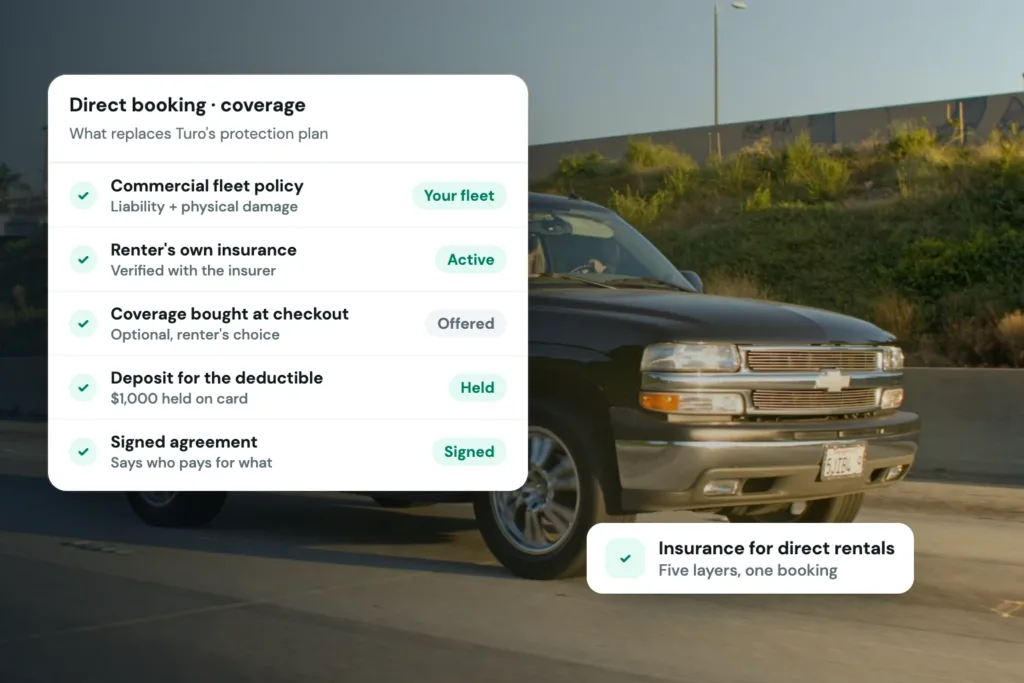
On Turo’s 90% plan, Turo keeps only $10 of a $100 day, which is less than a direct day costs once you pay for your own insurance. On fees alone, direct doesn’t win. What you’re really trading on that plan is risk: you carry up to $2,750 of damage per incident on Turo. Direct rentals with your own coverage, a verified renter and a deposit held on their card can be the safer setup even when they aren’t the cheaper one.
What this math leaves out
- Demand. Turo finds renters for you. Direct bookings come from people who already know you: repeat customers, referrals, Google and social. Start with those.
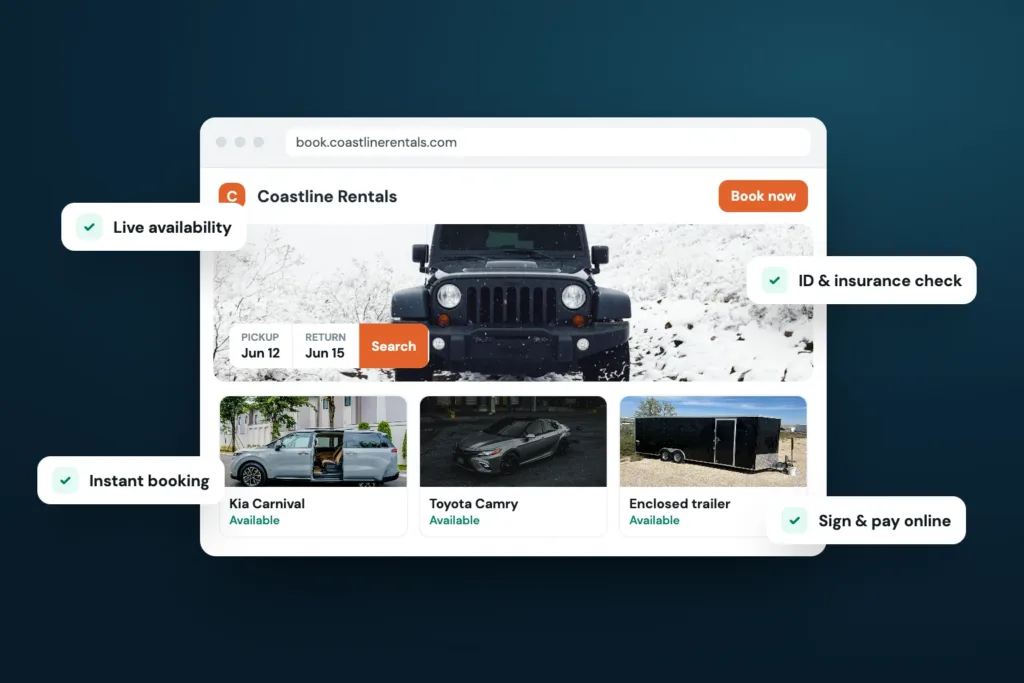
- Your time. Without automation, direct bookings mean texting for licenses and chasing deposits. With ID checks, deposits and e-sign built into checkout, most of that work happens before you ever hear from the renter.
- Insurance. $9 per rental day is an estimate. Commercial and per-trip policies vary a lot by state and vehicle, so get a real quote.
- Turo’s rules. Build your direct channel from renters you found yourself. Read Turo’s terms before contacting guests you met through Turo off the platform.
Run your own numbers
Your rate, utilization and plan will differ. The Turo fee calculator runs this same math on your numbers in about a minute. If the answer is yes, our guide to taking direct bookings without quitting Turo covers the setup, and Turo alternatives for hosts lays out every option that still exists.