On Turo, the rental agreement is Turo’s terms of service, and you never write a word of it. The day you take a booking yourself, the agreement is yours. Get it right and it settles most disputes before they start. Get it wrong and you’re arguing about a scratch with nothing signed behind you.
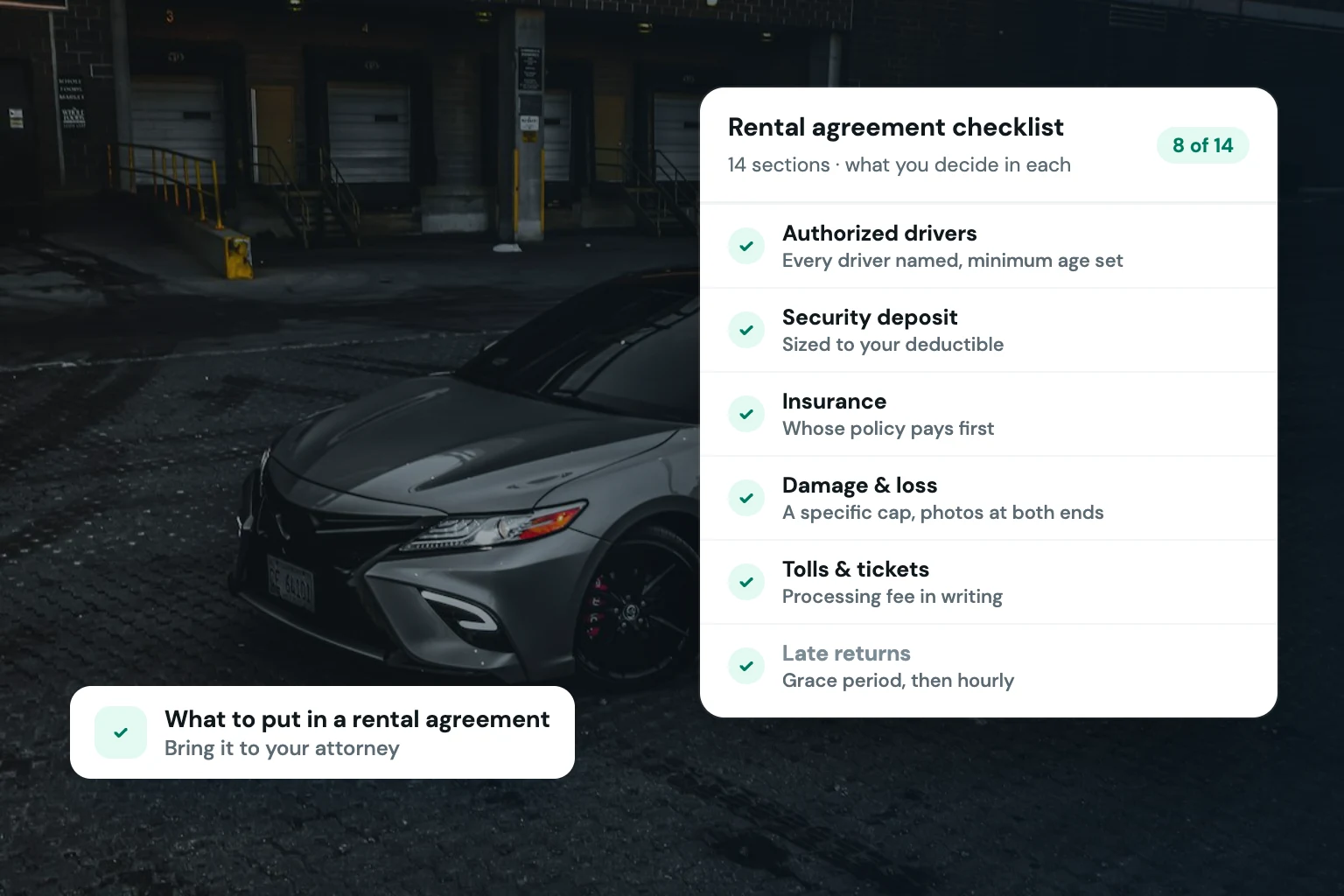
This is a checklist of what a direct-rental agreement needs to cover, and the decisions only you can make in each section. Bring it to the attorney who writes or reviews your terms, and you’ll spend that hour on your business instead of on the basics.
A checklist, not legal wording. Rental law differs by state, especially on damage and loss-of-use charges, damage waivers, minimum driver age and GPS disclosures. Have a local attorney write or review your agreement. It costs far less than the first dispute it prevents.
Why direct bookings need their own agreement
Turo’s terms do a lot of quiet work for hosts: who can drive, what counts as damage, how tolls get billed back, what happens when a guest returns late. Booked direct, none of that applies. Your agreement is the only document that says what the renter agreed to, and it’s the first thing a card network, an insurer or a small-claims judge will ask to see.
A good agreement does three jobs:
- Sets expectations before the trip: miles, fuel, cleaning, late fees.
- Gives you the right to charge for what goes wrong, from tolls to damage, using the card on file.
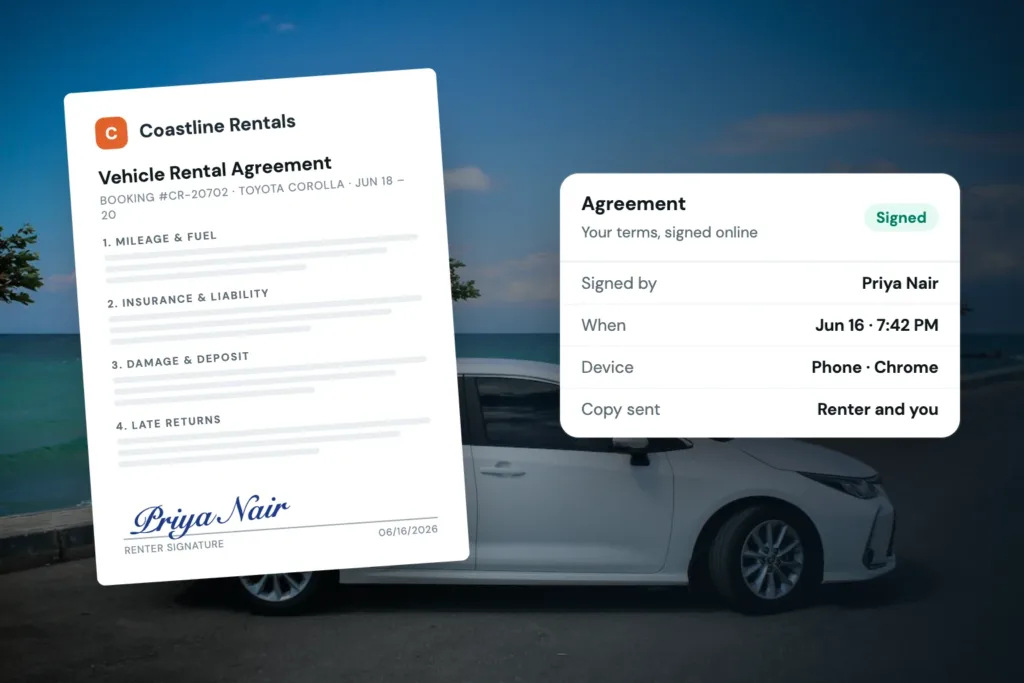
- Proves it. A signed, timestamped copy tied to the booking is what wins a chargeback. A paper form in a glovebox usually isn’t.
The checklist: 14 sections
1. Rental details
Covers: Your business, the renter, the vehicle (plate and VIN), pickup and return times and places, odometer and fuel at pickup.
You decide: Contract as your business, not yourself, so the agreement is with your LLC. Record odometer and fuel at every pickup.
2. Authorized drivers
Covers: Who may drive, and the requirements every driver has to meet.
You decide: List every driver by name and license number, and set a minimum age. Accidents with an unlisted driver are where coverage disputes start.
3. Charges and payment
Covers: The rate, taxes and fees, when payment is due, and your right to charge the card on file.
You decide: Say that you may charge the card on file for amounts owed after you send an itemized statement. That one line settles most chargeback disputes.
4. Security deposit
Covers: How much you hold, when, what it can be used for, and when it is released.
You decide: Size it to your insurance deductible or a typical small claim, and commit to a release timeline.
5. Permitted and prohibited use
Covers: Where the car can go and what it can’t be used for: impaired driving, racing, towing, off-road, smoking, pets.
You decide: Decide whether you allow rideshare and delivery driving. Most commercial rental policies exclude it.
6. Mileage, fuel and charging
Covers: Included miles, the overage rate, and the fuel or charge level at return.
You decide: Set included miles per day and an overage rate. For EVs, set a return charge level instead of a fuel level.
7. Insurance
Covers: Whose insurance pays first, the minimum coverage you require, and any coverage the renter buys at booking.
You decide: Pick one setup: the renter’s policy is primary and verified before pickup, or your policy covers the renter, who owes the deductible. Match it to what your insurer actually agreed to.
8. Damage, loss and theft
Covers: What the renter owes when the car is damaged or stolen, and how condition is documented.
You decide: Put a specific cap on the renter’s responsibility. Loss-of-use and admin fees are limited in some states.
9. Accidents, breakdowns and tickets
Covers: What the renter must do after an accident, who approves repairs, and who pays tolls and citations.
You decide: Set a reporting deadline and a phone number. Tolls and camera tickets arrive weeks later, so the processing fee needs to be in writing.
10. Cleaning and condition
Covers: Fees for excess dirt, smoking, pet hair and lost keys.
You decide: Use specific numbers. Vague fees are the ones renters dispute.
11. Late returns, changes and cancellations
Covers: Grace period, late fees, extensions and refunds.
You decide: Decide when an overdue car is treated as unreturned, and how extensions get approved and paid.
12. Tracking devices
Covers: Whether the car has GPS or telematics, and what the data is used for.
You decide: If it does, disclose it. Several states require it.
13. Owner’s rights
Covers: When you can end the rental early and recover the car.
You decide: Breach, false information and illegal use are the usual triggers.
14. General terms
Covers: Personal property, governing law, and the renter’s confirmation that they inspected the car and received a copy.
You decide: Name the state whose law applies.
Alongside the agreement, keep a condition report: photos of all four sides, the wheels, the windshield, the interior, the odometer and the fuel or charge gauge at pickup and at return. Photos at both ends are the evidence that settles most damage claims.
Five mistakes we see hosts make
- Signing at the curb. A renter in a hurry skims and signs anything, then disputes it later. Send the agreement with the booking so it’s signed before pickup day.
- Unlisted drivers. The renter’s friend drives, there’s an accident, and nobody’s insurance wants the claim.
- “Renter is responsible for all damage.” With no cap, no deductible and no photos, that sentence is hard to enforce. Specific numbers hold up better.
- No card authorization. If the agreement doesn’t say you can charge the card on file for tolls, fuel and damage, the renter’s bank may side with them.
- One agreement for every vehicle. An exotic needs a bigger deposit, a higher minimum age and stricter use rules than a commuter sedan. Keep a version per vehicle class.
Getting a signed agreement on every booking
Once your agreement is final, the work is making sure every renter signs it, every time, without you texting PDFs around. In Fleetwire you upload your agreement once and place the signature and booking fields, and every reservation gets its own copy filled in with that renter’s name, vehicle, dates and price. Your wording is used exactly as you wrote it. You can require the signature before the renter can pay, so there’s no confirmed booking without a signed agreement, and the signed copy stays on the booking with its timestamp and device. More: e-signatures for rental agreements and why digital agreements beat paper.
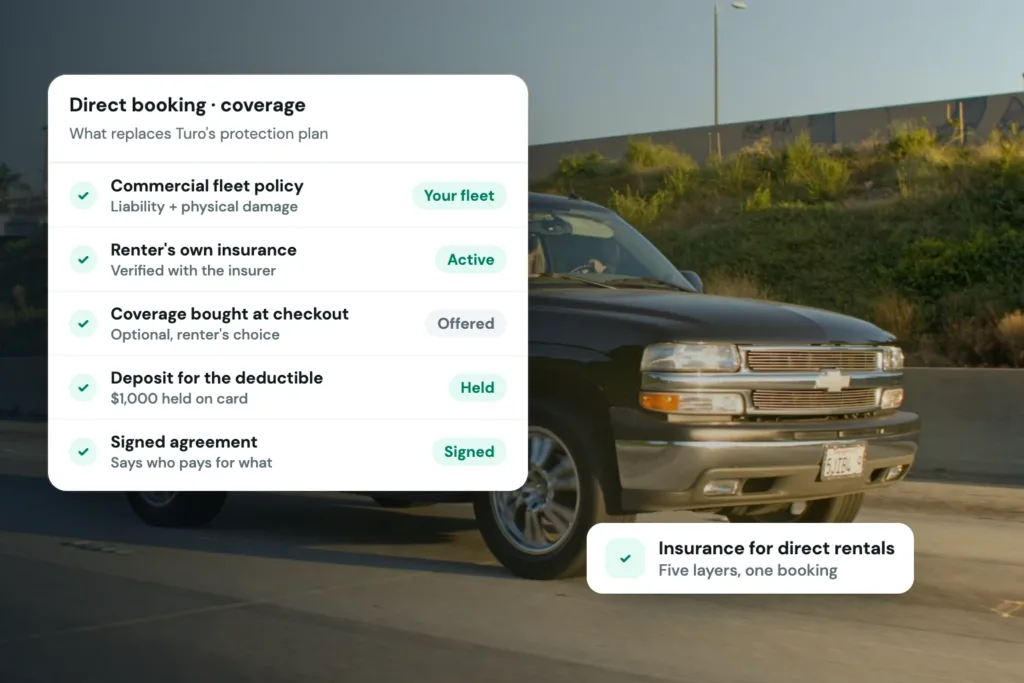
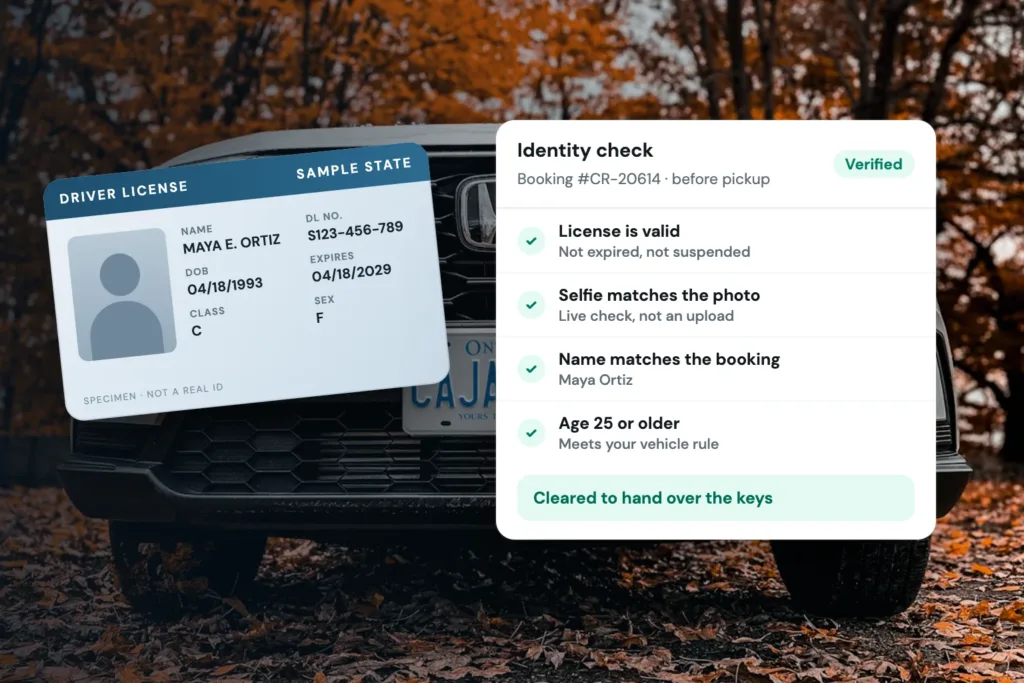
The agreement works best with the checks it depends on: ID verification for every listed driver, insurance verified at the source when the renter’s policy is primary, and a deposit held on their card to cover what the agreement says they owe.
Not sure which insurance setup to pick? Our guide to insurance for direct rentals walks through what replaces Turo’s protection plan.