A renter gets in an accident. The car is totaled. You file a claim, then find out the renter's insurance had lapsed two weeks earlier, or never actually covered rental use in the first place.
Now you are not filing a claim. You are eating the cost of a vehicle out of your own pocket because nobody checked before the keys changed hands.
This is not a rare horror story.
It is one of the most common, most expensive mistakes small rental operators make.
It happens because insurance verification, when it happens at all, usually means glancing at an insurance card and taking the renter's word for it.
Here is why that is not actually verification, and what to do instead.
Why this specific mistake is so easy to make
It is not that operators do not care about insurance.
It is that checking it properly has historically been inconvenient.
Calling an insurer to confirm active coverage means sitting on hold while a renter waits at the counter.
Cross-referencing a policy number against a database is not something most independent operators have access to.
So the default becomes simple: look at the card, looks fine, hand over the keys.
That does not happen because operators are careless. It happens because the better alternative used to be slow, manual, or unavailable.
The way most small operators check insurance today
If you are like most independent operators, verification looks something like this:
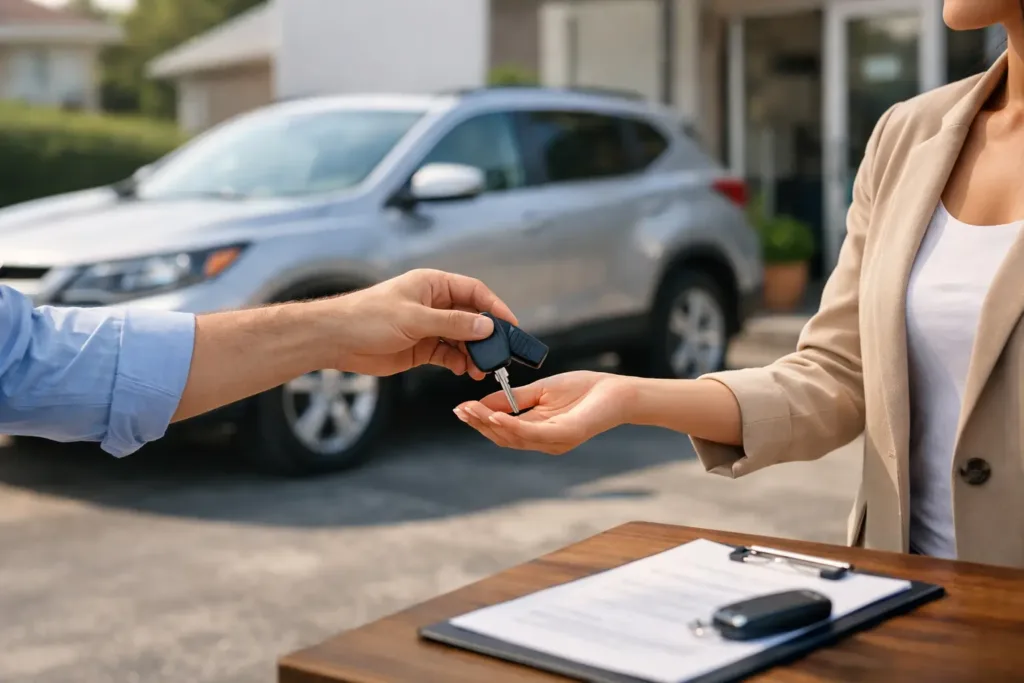
The renter hands you a photo of an insurance card, or a printed one, and you look at it.
Maybe you check that the policy number looks legitimate. Maybe you note the expiration date if you remember to.
Here is the problem with every part of that process.
A card only proves a policy existed at some point
A photo or printed card does not prove the policy is still active today.
Insurance can lapse for nonpayment, get canceled, or simply expire.
A card printed months ago tells you nothing about right now.
Most personal auto policies may not cover commercial rental use
Even a renter with an active personal policy may not actually be covered while driving your rental car.
Personal auto insurance is generally written for the policyholder's own vehicle, not a car they are renting from an independent operator.
A valid-looking card can still mean zero useful coverage when something happens.
You cannot catch either problem by eye
There is no visual difference between an active policy and a lapsed one on a printed card.
There is no way to tell from a glance whether a policy applies to rental use.
You are not actually verifying anything. You are looking at a piece of paper and hoping the important parts are true.
What it actually costs when this goes wrong
This is not hypothetical.
When a renter's coverage turns out to be lapsed or non-applicable after an incident, you are usually looking at one of two outcomes.
- You absorb the full cost of vehicle damage or loss yourself.
- You pursue the renter directly, which is slow, uncertain, and often results in a much smaller recovery than the actual damage.
For an independent operator running a handful of vehicles, a single incident like this can wipe out months of profit from that car.
In some cases, it can be worse.
It is the kind of loss that a five-minute verification step at booking could have prevented entirely.
Why pursuing the renter directly rarely makes you whole
Even when you can identify and locate the renter after the fact, collecting outside the insurance system is difficult.
You may be dealing with small claims court, a judgment that may or may not be collectible, and months of your time.
That is assuming the renter has the money to pay even if you win.
Compare that to a coverage check at booking that would have flagged the issue before it became your problem.
The math is not close.
Real-time verification: checking coverage before it matters, not after
The fix is not to look more carefully at the insurance card.
The fix is replacing the card with a system that confirms active coverage automatically, at the moment of booking, before a renter gets near the keys.
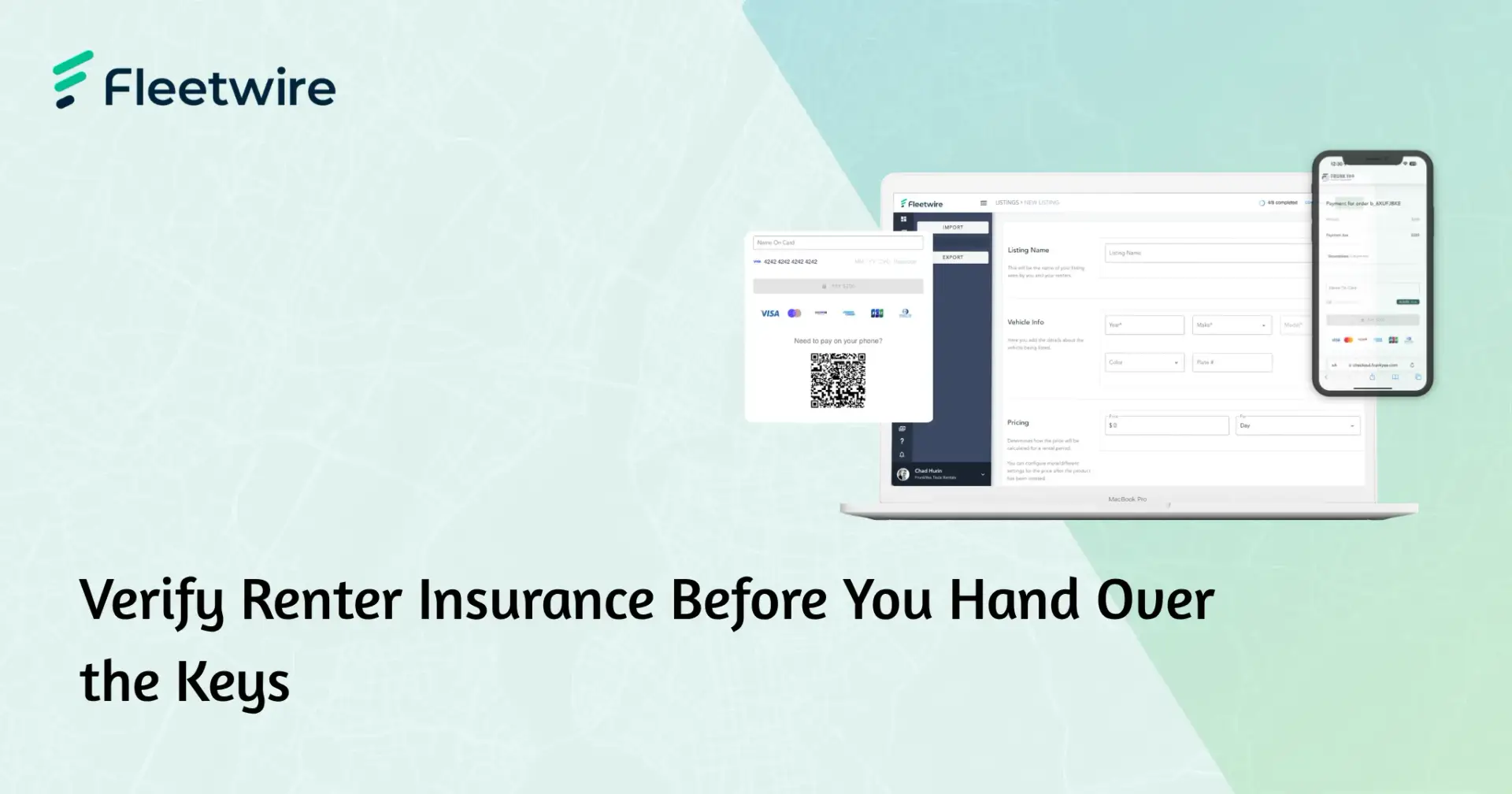
This is exactly what Axle integration does inside Fleetwire.
When a renter books, their insurance can be verified against real insurer data. Not a photo. Not a printed card. A live check of whether their coverage is active and applicable.
If it is not, you know before pickup, not after an accident.
That is the difference between verification and hoping.
It happens automatically at booking
No extra step for you to remember.
No manual lookup.
No calling an insurer's verification line and waiting on hold.
The check runs as part of the normal booking flow.
It does not slow down checkout
This is the objection many operators have before trying it: will this add friction?
It does not have to.
The verification happens during booking, not as an extra hurdle at pickup.
A renter with valid coverage can move through the process without you manually checking anything.
It catches the problem while there is still time to act
If a renter's coverage does not check out, you find out with enough time to make a decision.
You can require additional coverage, decline the booking, or have an informed conversation before the renter arrives.
That is much better than discovering the problem after the vehicle is already damaged.
What to do if a renter's coverage does not check out
This is not about turning away every renter with an insurance issue.
It is about knowing before it matters, so you can make an informed call instead of an accidental one.
Offer supplemental coverage at booking
Many rental platforms, including Fleetwire, can support a coverage add-on for renters who do not have qualifying insurance of their own.
That can turn a potential decline into a booking you are still comfortable taking.
Ask for updated proof before confirming
Sometimes the issue is outdated information, not an actual lapse.
A quick heads-up gives the renter a chance to sort it out before pickup, not during a stressful moment afterward.
Decline the booking if neither option works
This can feel like leaving money on the table.
It is still better than eating the cost of an uninsured incident.
Why this matters even more for a small, independent fleet
A large chain can absorb an occasional uninsured-incident loss as a rounding error against thousands of vehicles.
An independent operator with five or ten cars cannot.
A single serious incident with a renter who turns out to be uninsured can be the most expensive thing that happens to your business in a given year.
That asymmetry is exactly why real verification matters more for a small fleet than a large one.
Small operators are often the ones most likely to still be checking insurance by eye, even though they have the least room for that mistake.
Real-time verification is not an enterprise-only capability anymore.
National chains have long treated coverage checks as part of the rental process. Tools like Axle now bring similar verification capability to a five-car independent lot, not only a 500-location chain.
The bottom line
Looking at an insurance card and calling it verification is how many independent operators end up one bad booking away from a very expensive year.
Real-time verification against actual insurer data closes that gap.
It runs automatically at booking, avoids extra manual work, and gives you a chance to act before a coverage issue becomes your financial problem.
Stop guessing whether a renter is actually covered
Fleetwire's built-in Axle integration verifies renter insurance automatically at booking, using real coverage data instead of a photo of a card, with no extra manual steps for you or your renters.
Start free with FleetwireFAQ
Does insurance verification slow down the booking process for renters?
No. It runs automatically during booking. A renter with valid, applicable coverage does not need to wait while you manually call an insurer or inspect documents at pickup.
What happens if a renter's personal insurance does not cover rental use?
You know before pickup. That gives you time to offer supplemental coverage, request updated information, or decline the booking instead of finding out only after an incident.
Is checking an insurance card good enough?
No. A card only shows that a policy existed at some point. It does not prove the policy is currently active or that it applies to the rental use case.
Is this only necessary for expensive or high-value vehicles?
No. The financial exposure from an uninsured incident is serious for any vehicle in a small fleet. Even a mid-range car can represent a meaningful loss relative to the size of an independent operation.