Your car
What this car makes
On Turo's 70 plan, per car.
The same car on Turo vs. booked direct
| On Turo70 plan | Directyour site | |
|---|---|---|
| Booking revenue | ||
| Turo's share / card fees | ||
| Rental coverage | ||
| Booking software | ||
| Insurance | ||
| Cleaning and maintenance | ||
| Registration | ||
| Car payment | ||
| Profit per month | ||
| Profit per year | ||
| Break-even days | ||
| Months to pay off |
Estimates for planning, not financial, tax or insurance advice. Card processing at 2.9% + 30¢ per trip (standard Stripe pricing). Turo plans from Turo's US earnings plans, checked October 2026.
How the math works
Revenue is your daily rate times booked days. On Turo you keep your earnings plan's share of it: 70%, 80% or 90%. Turo's trip fee is paid by the renter on top of your rate, so it isn't in your revenue or your costs. Booked direct, you keep all of it minus card processing (2.9% + 30¢ per trip), rental coverage for the days the car is out, and booking software.
Costs on both sides are your insurance, cleaning and maintenance for each trip, and registration spread over 12 months. Tolls aren't counted, because renters pay them back on either channel. With a car payment, the payment comes out of profit too.
Break-even is the number of booked days a month that covers every monthly cost, including the payment. If you paid in full, it covers running costs, and the price shows up in the payoff months instead.
Months to pay off assumes every dollar the car earns before its payment goes to the car. With a loan, that's your payment times the payments left; interest you'd save by paying early isn't counted, so the real number is a little shorter. Paid in full, it's how long the car takes to earn back its price.
What this calculator leaves out
These are real costs that vary too much from car to car to guess for you. Count them before you buy a car to rent out.
- Depreciation. Miles from renters lower what the car is worth when you sell it.
- Damage. On Turo, your plan's damage responsibility is $250 to $2,750 per incident. Booked direct, it's your coverage's deductible, plus any security deposit you collect.
- Downtime. Days in the shop, waiting on parts, or paused by a platform earn nothing. Open recalls are one cause you can check for free.
- Your time, parking, a tracker, and marketing for direct bookings.
- Income tax. Profit here is before taxes. A tax professional can tell you what you'll owe and what you can deduct.
Turo or direct for this car?
Turo brings renters you'd never find on your own, and that's worth its share while you're building a fleet. Booked direct, you keep more of each trip but pay for your own coverage and find your own renters. Most hosts who grow run both: Turo for discovery, and their own booking site for repeat guests and referrals.
Don't take a Turo-sourced trip off Turo to skip the fee. That breaks Turo's terms and risks your account. Direct bookings are for renters you bring in. A calendar sync blocks your site whenever a Turo trip is booked, so the two never collide.
Frequently asked questions
Is renting my car on Turo worth it?
It depends on three numbers: how many days the car books, what you pay for it each month, and how much Turo keeps. A car that's paid off clears its costs at far fewer booked days than one with a payment. Put your numbers in the calculator. If break-even is close to the days you actually book, one slow month or one repair puts you underwater.
How many days a month does a rental car need to book to break even?
Divide your monthly costs (payment, insurance, registration) by what each booked day leaves you after the platform's share and per-trip cleaning. The calculator does this for both Turo and direct. A car with a payment often needs 10 or more booked days a month just to cover it.
How much do Turo hosts make per car?
It varies too much by car, city and season for one average to mean much. Your own daily rate, booked days and costs are the only numbers that tell you what your car makes. If you're already hosting, use last quarter's numbers from your Turo earnings page.
Should I buy a car to rent on Turo?
Run the purchase through the calculator first, with a booked-days number you've actually seen in your area, not a best case. Then count what it leaves out: depreciation, damage, and downtime. This tool gives estimates, not financial advice. If you're financing, compare the payoff months with the loan term and with how long you plan to keep the car.
Does Turo cover insurance, or do I need my own?
Turo's earnings plan includes protection during trips, but you still need your own policy on the car. Booked direct, there's no Turo protection, so you need coverage for renters: a commercial rental policy or per-trip coverage. That's why the direct column has its own coverage line. Ask a broker who knows car rental what applies in your state.
What does this calculator save or send?
Nothing. It runs in your browser, with no email and no account. The "copy a link" button puts your numbers in the page address so you can share or bookmark them.
More free tools for hosts
Run it on Fleetwire
Keep more of every trip your next car books
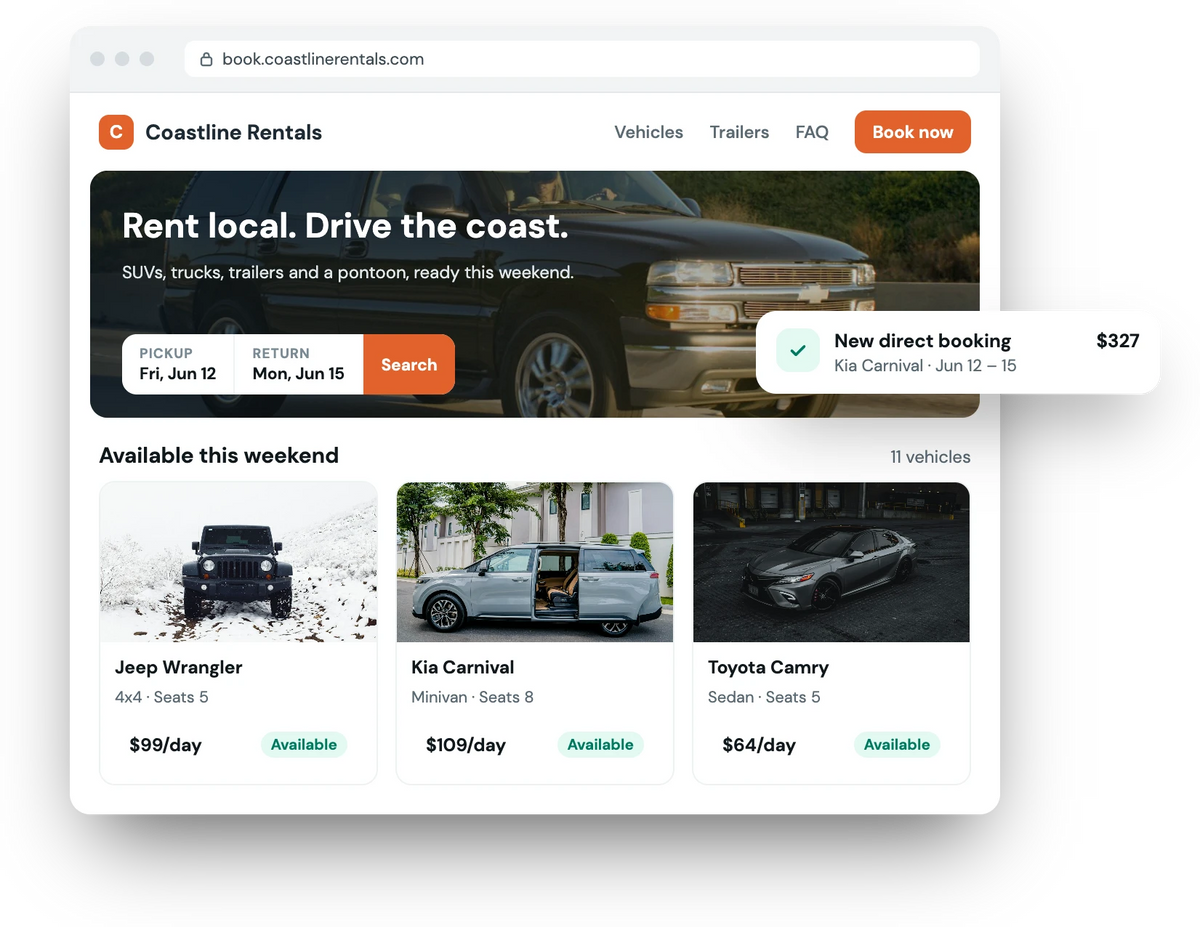
Fleetwire gives you your own booking site with renter verification, deposits and e-signed agreements, next to your Turo listings. Plans from $24/mo, the software number this calculator already counted.
- ✓Your rules, your renters, your calendar
- ✓Turo trips block your site automatically
- ✓Live the same day