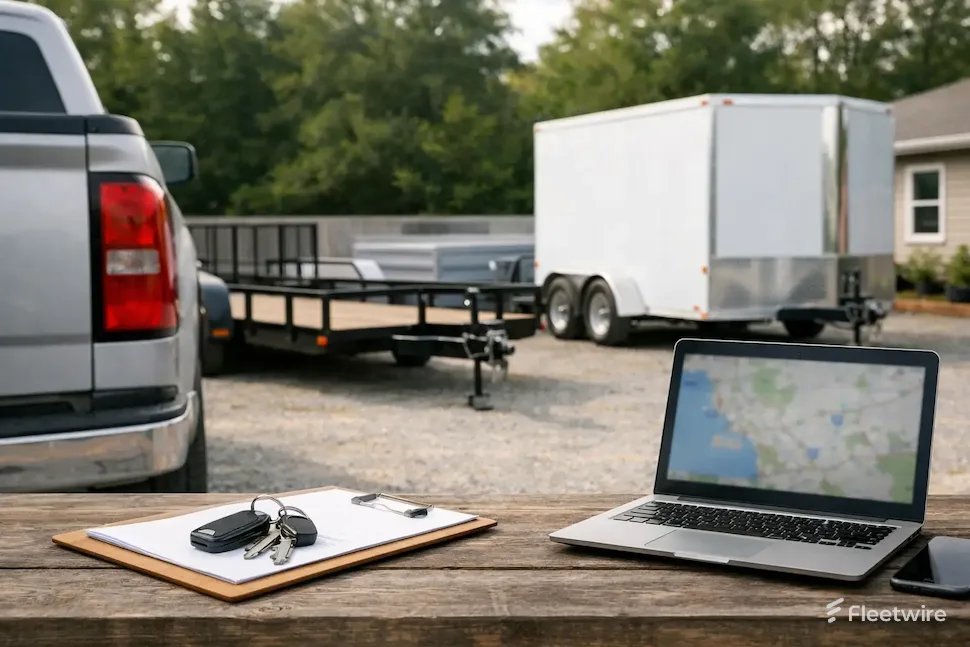
A trailer reservation can look simple from the outside: a customer chooses dates, pays, and picks up the unit. For the operator, that same reservation often involves availability checks, rate decisions, towing requirements, driver information, deposits, documents, pickup instructions, and damage accountability. Trailer rental reservation software puts those steps into one controlled booking flow instead of leaving them scattered across calls, texts, payment requests, and paperwork.
For a small trailer fleet, the goal is not enterprise complexity. It is a professional system that lets customers book with confidence while giving the operator a clear record of what was reserved, who reserved it, what was paid, and what still needs to happen before handoff.
What trailer rental reservation software should handle
The right system starts with the reservation itself, but it cannot stop at a calendar. A calendar shows when a trailer is unavailable. A rental operating system should also help determine whether the booking is ready to accept.
That means each trailer needs an accurate listing with its photos, specifications, rental rules, rates, minimum durations, pickup details, and availability. Customers should be able to select their dates, see a clear total, and complete checkout on the operator’s own branded website. The business keeps control over how its inventory is presented rather than sending every customer through a generic marketplace listing.
Availability needs more attention than many operators expect. A trailer that returns at 5 p.m. may not be ready for another renter at 5:30 p.m., particularly if it requires inspection, cleaning, repairs, or accessory checks. Reservation software should support practical availability rules and give the operator a reliable view of upcoming pickups and returns. If the same trailer is listed in more than one place, calendar synchronization can also reduce the risk of accepting overlapping bookings.
For businesses that market inventory on Turo or Getaround alongside their own storefront, synchronized calendars are especially useful. They do not replace a thoughtful availability policy, but they help keep external activity and direct reservations visible in the same operational picture.
A reservation is not confirmed just because a date is selected
Trailer rentals carry practical risks that differ from a simple retail checkout. The customer may need to provide a valid ID, meet your rental requirements, agree to your terms, and place a card-hold deposit before pickup. The trailer may have a specific towing capacity, hitch requirement, payload limit, or use restriction that the renter needs to understand.
A good reservation workflow collects the information needed to make a sound decision without turning every inquiry into a back-and-forth conversation. At checkout, the customer can provide contact details, upload identification when required, review and e-sign the rental agreement, and complete payment or deposit authorization. The operator can then review the reservation with the relevant documentation attached to the booking record.
This does not mean every trailer operator should use identical screening rules. A utility trailer rented for a local afternoon job may call for a different process than an enclosed trailer carrying valuable equipment or a multi-day car hauler reservation. Your software should support the standards you set, not force your business into a one-size-fits-all workflow.
Why payments and deposits belong inside the booking flow
Payment is where a reservation either becomes operationally clean or creates more work. When a customer books online but receives a separate payment request later, the operator must track whether the request was sent, whether it was paid, and whether the rental dates should remain blocked.
Integrated checkout removes that gap. The customer sees the rental charge, applicable taxes, fees, and deposit requirements before submitting the reservation. The business has a record tied directly to the trailer, renter, dates, agreement, and transaction.
Card-hold deposits are particularly valuable for trailer operations because they establish a clear process before equipment leaves the lot. A deposit is not a substitute for good inspections or well-defined rental terms, but it gives the operator a consistent financial control at the point of reservation. The exact amount and conditions should reflect the trailer type, rental duration, customer profile, and local requirements.
Transparent pricing also protects the customer experience. If a trailer has an hourly or daily rate, cleaning fee, late return charge, mileage allowance, or add-on equipment charge, present those policies clearly. Surprises at pickup tend to create disputes, delays, and avoidable pressure on your team.
Build a direct booking storefront, not another inbox
Many trailer businesses begin with a phone number and a contact form. That approach can work when the fleet is small and demand is light. But as reservation volume grows, each inquiry becomes a manual sales and coordination task: confirm dates, send pricing, answer basic questions, collect documents, take payment, send terms, and follow up before pickup.
A direct booking storefront turns that repeated work into a customer-facing process. Customers can browse the available fleet, compare trailer options, choose dates, and submit a reservation from their phone or desktop. The operator is no longer dependent on being available to answer every message immediately.
Brand control matters here. A contractor booking a dump trailer, a family moving with an enclosed trailer, or a customer transporting a vehicle should encounter a business that looks established and organized. Your website, policies, trailer details, and communication should all point to the same standard of service.
Fleetwire is built for operators that want that direct channel without piecing together separate tools for listings, bookings, payments, verification, agreements, and rental communications. Its subscription model begins at $34 per month, with no per-booking commission, and operators can try it for 14 days without a credit card.
Use automation to reduce handoff mistakes
The best trailer rental reservation software does not eliminate human judgment. It removes repetitive administrative work so your team can focus on inspections, customer questions, maintenance, and exceptions.
Automated reservation confirmations give customers immediate proof of their booking and clarify the next step. Scheduled reminders can request any missing requirements before pickup and reduce no-shows or last-minute confusion. Pickup instructions can explain where to arrive, what identification to bring, and when the trailer must be returned.
Internally, the reservation record should make status easy to understand. Can the trailer be released? Has the agreement been signed? Was the deposit authorized? Did the customer complete verification? Is payment still due? When those answers live in different systems, staff must reconstruct the rental file every time a customer arrives.
Communication should also be connected to the reservation. A quick message about a pickup time change is more useful when the recipient, trailer, dates, and booking details are already clear. That is especially helpful when more than one person handles customer service or lot operations.
Choose software based on your real workflow
Not every trailer operation needs the same capabilities. A one-unit owner may prioritize a polished booking page, payment collection, and a signed agreement. A fleet with multiple trailer categories may need detailed inventory controls, rate rules, add-ons, staff access, and tighter calendar management.
Before choosing a system, map one reservation from first visit through return. Identify where you currently repeat information, wait on a customer, copy data between tools, or discover a problem too late. Those friction points should guide the evaluation.
Look closely at four areas: how inventory and availability are managed, whether checkout supports your payment and deposit process, how identity and agreements are handled, and whether the customer experience can reflect your own brand. If the software is strong in only one area, you may still end up rebuilding the workflow with extra apps and manual steps.
It also helps to consider what happens after a booking is accepted. Can you find the rental record quickly at pickup? Can you confirm the customer completed the required steps? Can you see upcoming returns before you promise the next customer a trailer? Reservation software earns its value in those daily moments, not just on the booking page.
Make every booking easier to trust
A direct online reservation should feel straightforward for the customer and controlled for the operator. Clear trailer listings, real-time availability, transparent charges, verified renter details, deposit collection, and signed agreements create that balance.
Start by setting the standards you want every renter to meet, then build the reservation flow around them. When the system consistently gathers the right information before pickup, your trailer business can spend less time chasing details and more time keeping the fleet ready for its next rental.