Part of our guide: How to start a car rental business (without quitting Turo)
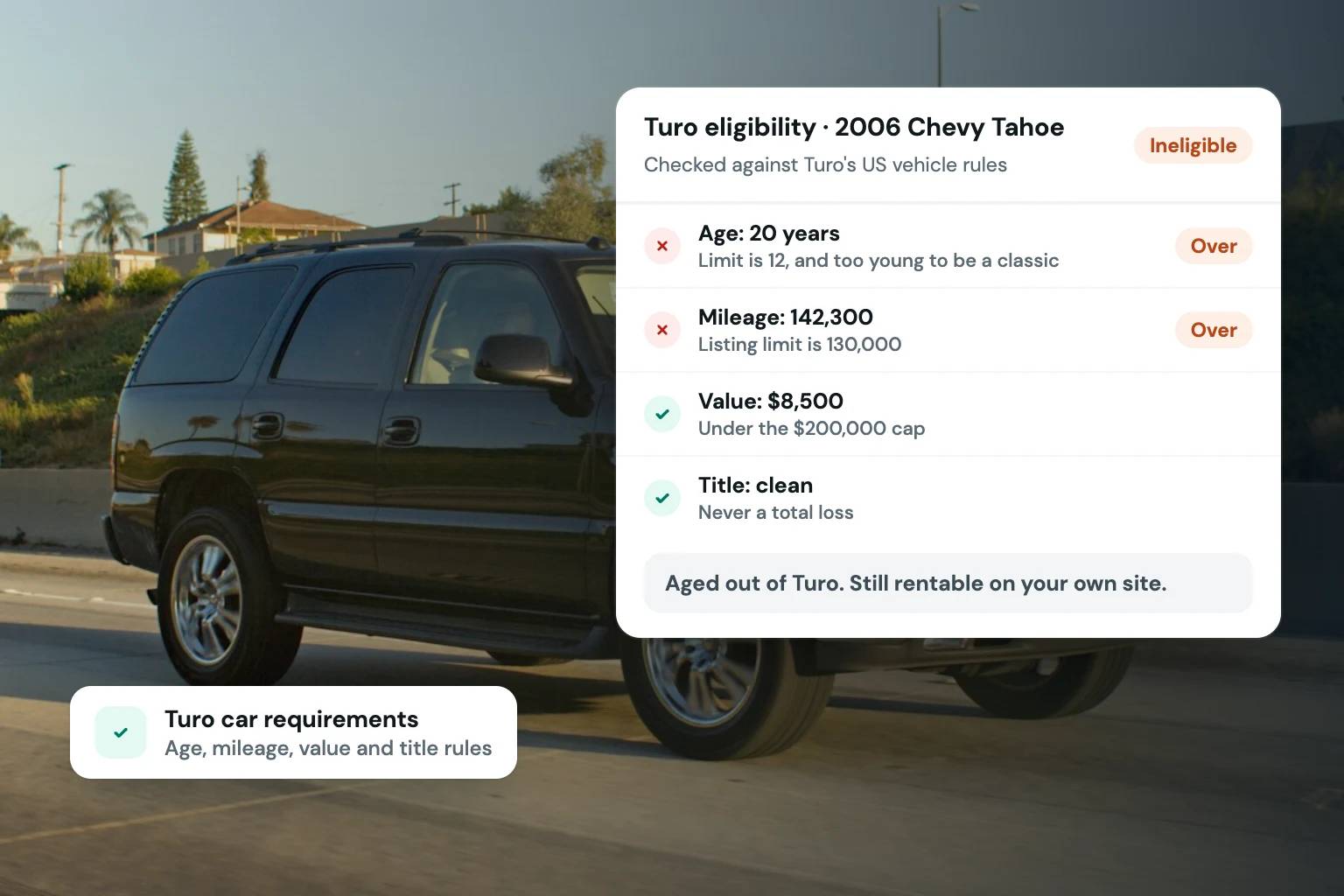
Turo’s vehicle rules fit on a napkin: 12 years, 130,000 miles, $200,000 and a clean title. The details are spread across five help pages, though, and the exceptions are where hosts get caught: the classic car that needs a review, the financed car, the van with one seat too many.
Here’s every US requirement in one place, as of Turo’s latest updates, with what each rule means in practice and what your options are when a car ages out.
TL;DR
- A car must be 12 years old or newer, have under 130,000 miles, be worth $200,000 or less and have a clean title that was never a total loss.
- Older cars can still list as classic (25+ years, up to $85,000) or specialty (12–25 years, luxurious, unique or rare), after an individual review.
- Hosts must be 21 or older, carry valid insurance and finish Turo’s host orientation before the first listing goes live.
- Once listed, US cars need an annual safety inspection, and maintenance failures carry fees starting at $100.
- When a car ages out, you can still rent it on your own booking site. Turo’s limits don’t follow it there, but your insurer’s rules and state law do.
Turo’s vehicle requirements at a glance
From Turo’s vehicle eligibility page for the US, last updated July 13, 2026:
| Requirement | Turo’s US rule | What to know |
|---|---|---|
| Age | No more than 12 years old | Classic (25+ years) and specialty (12–25 years) cars can be approved one by one. |
| Mileage | Under 130,000 miles to list | A car that passes 130,000 after it’s listed can stay if it’s in excellent condition. |
| Value | Fair market value up to $200,000 | Turo sets value with third-party vendors at listing. Classics cap at $85,000. |
| Title | Clean title, never a total loss | Salvage, rebuilt, flood, lemon and other branded titles are out, and so are washed titles. |
| Odometer | Must work and be untampered | Rollbacks and inconsistent mileage count as a branded history. |
| Registration | Registered to you, or an owner who authorized you | Permanent or temporary plates. No dealer or trader plates. |
| Seats | Fewer than 16 (15 passengers plus driver) | California caps it at 10 seats. |
| Vehicle type | No limos, off-road, motorcycles, RVs or tow trucks | Most three-wheelers and anything that needs a commercial license are out too. |
| Box trucks | Allowed, except in Oregon | No air brakes, and they must meet state weight limits. |
| New York | Inspection sticker valid through next month | Applies to cars registered in New York. |
Age: the 12-year rule and its exceptions
Turo’s rule is short: your car “can’t be more than 12 years old”. Turo doesn’t spell out whether that’s counted from the model year or another date, so if a car is right at the edge, check it in the listing flow before you buy it for Turo.
Two exceptions let older cars in, and both are reviewed one at a time:
- Classic vehicles are 25 years or older, in excellent mechanical and physical condition, with working seat belts and a fair market value no more than $85,000. Turo may ask for a safety inspection.
- Specialty vehicles are 12 to 25 years old and have to stand out as luxurious, unique or rare. They need a safety inspection before listing, and the value cap is $200,000.
That leaves a gap. A regular 15-year-old commuter car is too old for a standard listing and not special enough for the specialty route, so for most hosts it’s simply done on Turo.
Mileage: under 130,000 to list
A car needs fewer than 130,000 miles when you list it. The rule is gentler once it’s on the platform: Turo says cars that reach 130,000 after listing may stay if they’re in excellent condition and still meet its legal, safety and mechanical standards. The odometer has to work, and any sign of tampering disqualifies the car.
Rental cars rack up miles fast. At 20,000 miles a year, a car you buy at 85,000 miles hits the listing limit in a little over two years, so the miles matter as much as the model year when you’re buying.
Value: the $200,000 cap
Turo covers a car’s actual cash value up to $200,000, so that’s the listing cap. Turo uses third-party vendors to value the car when you list it. If yours is worth more, Turo asks you to contact support before listing. Classics cap at $85,000.
Title: clean, never totaled, never washed
This is the rule with the harshest penalty. Turo’s ineligible titles page rules out branded titles, including salvage, rebuilt or reconstructed, junk, lemon or buyback, flood, fire, water or hail damage, and odometer rollback. It also rules out any car declared a total loss at any point, cars “subject to outstanding finance”, and any car with an unclean Carfax history.
It also closes the obvious loophole. A “washed” title, where a branded car is re-registered in a state where the brand doesn’t carry over, is still ineligible. List one anyway and Turo says it will remove the car, void your protection plan and may suspend your account. Turo puts the burden on you to know the history, and suggests a Carfax report before listing.
Financed or leased? Turo’s listing guide tells hosts to check that their loan or lease documents allow car sharing, and its titles page lists cars “subject to outstanding finance”. If your car has a loan on it, read your contract and ask Turo support before you list.
Vehicle types, seats and plates
Turo excludes limousines, off-road vehicles, motorcycles, RVs, tow trucks, most three-wheelers and anything that needs a commercial license to drive. The seat limit is fewer than 16, which is 15 passengers including the driver, and only 10 in California. Box trucks are allowed everywhere except Oregon, as long as they don’t have air brakes and meet the weight rules for their state.
The car has to be in the US, registered to you or to an owner who has authorized you to list it, and legal in your state. Permanent and temporary plates are fine; dealer and trader plates aren’t. Cars registered in New York also need an inspection sticker that’s valid through at least the following month.
Host requirements
From Turo’s listing guide, to host in the US you need to:
- Be at least 21 years old and have a Turo account.
- Have valid car insurance and meet your region’s legal and insurance standards.
- Acknowledge Turo’s vehicle tracking and technology policy.
- Complete Turo’s host orientation webinar. Your listing doesn’t go live until you do.
Turo also recommends at least 10 clear photos, and its rules bar your phone number, address, social links, and any fees or deposits Turo doesn’t support from the listing itself.
Staying eligible after you list
Passing the bar once isn’t the end of it. Turo’s maintenance requirements say US hosts must get an annual vehicle safety inspection and maintain every car to Turo’s checklist. When that slips, Turo can:
- Charge a $100 violation fee or withhold earnings on the trip, for things like lapsed registration, inspection or insurance, or broken lights.
- Add a $350 roadside fee on top if a maintenance failure leads to a roadside dispatch.
- Put your account under review for tire problems such as bald tires, unlist the car, or void your protection if poor maintenance caused the damage.
Open recalls are their own rule: Turo blocks a car with an open recall and gives you 72 hours to take it off after a notice. Our recall guide covers what Turo, the federal rule and state laws each require.
A checklist before you buy a car for Turo
- Model year. Count forward to see how many listable years the car has left. A car you buy at 9 years old has about three on Turo.
- Odometer. At 20,000 miles a year, an 85,000-mile car crosses 130,000 in a little over two years.
- Title and history report. Run a Carfax or similar before you pay. A branded or washed title can’t be listed at all, and Turo says knowing the history is on you.
- Fair market value. Anything near $200,000 (or $85,000 for a classic) may need a conversation with Turo first.
- Seats and type. Big vans, lifted off-roaders and anything that needs a CDL won’t list.
- Your loan or lease. Turo tells hosts to confirm their financing or lease documents allow car sharing.
- Open recalls. Turo won’t list a car with an open recall. Check the model for free before you buy.
When a car ages out of Turo
Every car you list will eventually hit 12 years or 130,000 miles. For a fleet built on Turo, that’s a car that still runs well and suddenly can’t earn. You have three options: sell it, make the specialty or classic case if it qualifies, or keep renting it on your own booking site.
The third option is where a lot of independent fleets get their start. Turo’s age, mileage and value caps are Turo’s policies, not laws, so they don’t apply to bookings you take yourself. Some things do follow the car, though:
- Your insurance. Commercial and rental policies set their own rules on vehicle age, value and use. Our insurance guide for direct rentals covers what replaces Turo’s protection plan.
- State law. Registration, inspection and any rental-specific rules in your state still apply.
- Recalls. Nobody checks your direct bookings for you, so recall alerts do it nightly for every car.
- Your own standards. Renters on your site judge the car, not a platform badge. An older car in great shape, with clear photos and an honest description, rents fine.
Fleetwire doesn’t set an age, mileage or value cap of its own. Your cars get a booking site with your name on it, an agreement renters sign before they pay, card holds for deposits, ID and insurance verification, and recall alerts. If you’re weighing how many cars it takes to make direct bookings worth it, start with the 5-car math, or use the Turo fee calculator to see what Turo takes from each trip today.
FAQ
What is the oldest car I can put on Turo?
In the US, a standard listing can be up to 12 years old. Older cars can still be listed as classic or specialty vehicles: classics are 25 years or older with a fair market value up to $85,000, and specialty cars are 12 to 25 years old and must be luxurious, unique or rare. Both are reviewed one at a time and need to be in excellent condition.
What disqualifies a car from Turo?
Being more than 12 years old (without a classic or specialty exception), having 130,000 miles or more when you list, a branded or washed title, ever being declared a total loss, a value over $200,000, 16 or more seats, or being a type Turo excludes, such as limos, RVs, motorcycles and tow trucks.
Can I keep a car on Turo after it passes 130,000 miles?
Yes, if it was listed before it got there. Turo’s eligibility page says cars that reach 130,000 miles after listing may stay if they’re in excellent condition and still meet its legal, safety and mechanical standards.
Can I list a rebuilt or salvage title car on Turo?
No. Turo’s ineligible titles page lists salvage, rebuilt, reconstructed, flood, fire, hail, lemon and junk titles, plus washed titles. If you list one anyway, Turo says it will remove the car, void your protection plan and may suspend your account.
How old do you have to be to host on Turo?
At least 21 in the US. You also need valid car insurance, need to acknowledge Turo’s tracking policy, and must complete Turo’s host orientation webinar before your first listing goes live.
Does Turo require an inspection?
Turo’s maintenance requirements say US hosts must get an annual vehicle safety inspection. Specialty vehicles need one before listing, and New York cars need a current inspection sticker.
Can I rent out a car that’s too old for Turo?
Yes, on your own booking site. Turo’s age and mileage limits are Turo’s, not the law’s. Your insurer will have its own rules about vehicle age and value, and your state’s registration and rental rules still apply, so check those first.
Sources
- Turo: Vehicle eligibility, US (updated July 13, 2026)
- Turo: Classic and specialty vehicles, US (updated April 21, 2026)
- Turo: Ineligible vehicle titles (updated April 28, 2026)
- Turo: Listing a vehicle, US (updated April 16, 2026)
- Turo: Maintenance requirements (updated April 21, 2026)
This article is general information, not legal or insurance advice. Turo changes its policies; the rules above are as published on Turo’s help center on the dates listed. Fleetwire isn’t affiliated with Turo.