Part of our guide: How to start a car rental business (without quitting Turo)
Most hosts put a tracker in their first car after a scare: a late return, a renter who stops answering, or a story in a Turo group about a car that never came back. Here’s what each type of tracker actually does, what Turo requires and forbids, what the law lets you do with the data, and how a tracker can also handle keyless pickups.
The short version. A plug-in tracker is the simplest way to see location and mileage. A hardwired tracker with a starter cut-off and remote lock is better against theft and lets renters pick up without you. Turo allows trackers, bans AirTags outside Australia, and requires a manufacturer tracker on US cars worth $125,000 or more. Some states, California in particular, limit how a rental company may use tracker data, so set yours up to match the law where you rent.
The four kinds of tracker
| Type | What it does | Good | Watch out |
|---|---|---|---|
| Plug-in (OBD-II) | Plugs into the port under the dashboard. Location, trips, mileage, often fuel and engine codes. | Two-minute install, easy to move between cars. | Easy for a renter to find and unplug. |
| Hardwired | Wired into the car, often hidden. Location plus remote lock, unlock and a starter cut-off on many models. | Hard to remove; can disable a stolen car and handle keyless pickups. | Needs an installer or some confidence with wiring. |
| Built-in (connected car) | The manufacturer’s own telematics, such as a Tesla’s app and Fleet API. | Nothing to install; often includes phone keys. | Only for supported models; features vary by brand. |
| Bluetooth tags | AirTags, SmartTags and Tile. They report location through nearby phones. | Cheap. | Turo prohibits them as trackers outside Australia, and they alert renters to their presence. |
Brands matter less than the type. Bouncie is a common plug-in; MooveTrax sells hardwired trackers with a starter cut-off and remote lock; Teslas come with their own connection. Pick the type that matches the problem you’re solving, then compare devices within it.
What Turo allows and requires
From Turo’s tracking and technology policy for hosts:
- Trackers are allowed. Turo permits GPS, aftermarket trackers, manufacturer devices, telematics and cameras to track and protect your car.
- Interior cameras and audio need consent. You must get the guest’s explicit written consent in Turo messaging before turning on any device that sees the interior or records audio.
- Bluetooth tags are banned outside Australia. AirTags, SmartTags and Tile can’t be used as trackers, and hosts who keep using them risk suspension.
- High-value cars need a manufacturer tracker. In the US, a car with a fair market value of $125,000 or more needs an activated OEM tracker. Without one, Turo may withhold up to 20% of covered damages above your plan’s damage responsibility.
- Turo can use the data. To recover a car, act on reports of reckless driving, or share it with insurers and law enforcement.
Turo’s eligibility rules for the car itself are separate; see Turo car requirements.
What to look for in a rental car tracker
- A cellular connection. Live location needs a device with its own 4G LTE connection, which usually means a monthly plan.
- Tamper and unplug alerts. You want to know the moment a plug-in device is pulled or a hardwired one loses power.
- A starter cut-off, if theft is your worry. Being able to stop a stolen car from restarting matters more than a map of where it went.
- Remote lock and unlock, if you want keyless pickups. It lets a renter start a trip without meeting you.
- Readings at pickup and return. Odometer and fuel recorded automatically settles mileage and fuel disputes without photos of the dashboard.
- A connection to your booking software. A tracker that knows which booking a car is on can unlock for the right renter and attach readings to the right trip.
Keyless pickups: the other reason to install one
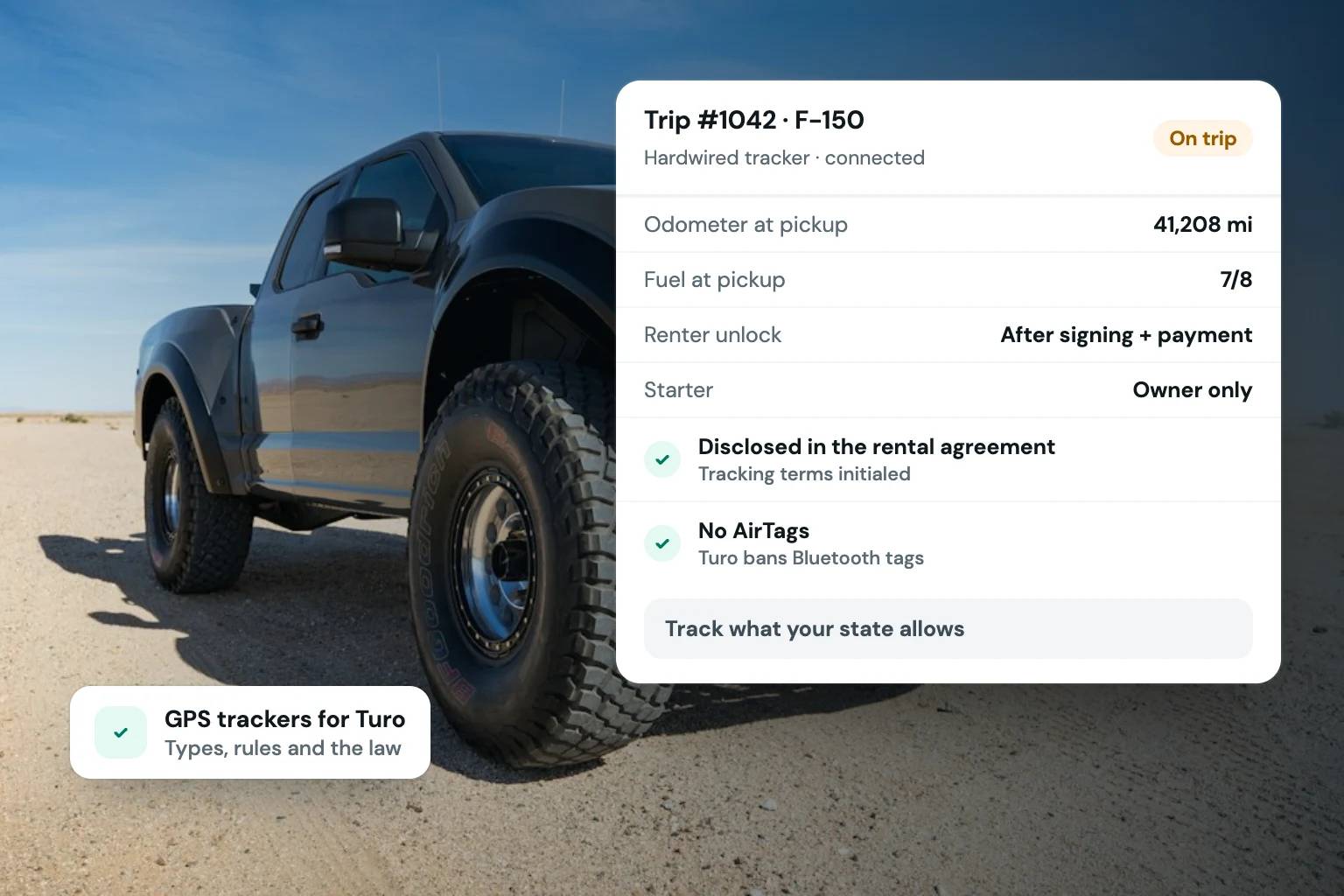
A tracker that can lock and unlock the car turns pickup into something the renter does from their phone. That matters for airport delivery, late arrivals and anyone running more cars than they can meet in person. Set it up so the car only unlocks once the renter is verified, has signed and has paid, and keep control of the starter yourself.
Teslas do this differently: you send the renter a phone key through Tesla, and remove it after the trip.
What the law lets you do with tracker data
Owning a tracker is one thing; what you do with its data is another, and some states set rules for rental companies. California is the clearest example. Civil Code § 1939.23 says a rental company may not use information about how a renter used the car that came from electronic surveillance, except in specific cases, including:
- Recording when the car left and came back, the mileage driven and the fuel level at return.
- Locking or unlocking the car at the renter’s request.
- Locating a car that’s reported stolen or missing, or that’s 24 hours past its return date, after notifying the renter. Your agreement must warn renters this can happen, and they initial it.
- Geofence alerts only if the car leaves the country without permission or enters an impound or tow yard.
- A request from law enforcement with a subpoena or warrant.
The same section says a rental company may not track a renter to impose fines or surcharges for how they used the car. That rules out things like mid-trip geofence alerts or speed reports for rental companies covered by the law.
Other states have their own rules, and peer-to-peer platforms like Turo can be treated differently from a rental company. This is general information, not legal advice: ask an attorney in your state which features you can turn on, and put your tracking terms in your rental agreement either way.
Where Fleetwire fits
Fleetwire connects to trackers instead of selling them, so the data sits on the booking it belongs to (GPS and telematics):
- Bouncie: odometer, fuel and location recorded at pickup and return, vehicle health alerts, and mileage overage worked out for the invoice. Read-only: it can’t lock or stop a car.
- MooveTrax: lock, unlock and starter control from the dashboard, automatic unlock when a trip starts, and renter unlock from the reservation page, which stays off until the agreement is signed, any ID check has passed and the balance is paid. Renters never control the starter.
- Tesla: phone keys sent from the booking and removed after the trip, readings at pickup and return, and Supercharging invoices matched to the renter who charged.
Use the features your state allows, and say in your agreement which ones you use. Start a free trial, or check any car for open recalls with our free recall check. Theft and damage are also insurance questions; see car rental business insurance.
FAQ
What is the best GPS tracker for Turo?
It depends on what you want it to do. For location and mileage, a plug-in OBD-II tracker is the simplest. For theft protection and keyless pickups, a hardwired tracker with a starter cut-off and remote lock is stronger. For Teslas, the car’s own connection does most of the job. Avoid Bluetooth tags: Turo prohibits them as trackers outside Australia.
Does Turo require a GPS tracker?
Not for most cars. In the US, Turo requires an activated manufacturer (OEM) tracker on cars with a fair market value of $125,000 or more. Without one, Turo may withhold up to 20% of covered damages above your plan’s damage responsibility. See Turo’s tracking policy.
Does Turo have trackers on their cars?
Turo doesn’t own the cars or install trackers. It permits hosts to use GPS, telematics and other devices, and can use that data to recover a car, review reports of reckless driving, or share it with insurers and law enforcement.
Are AirTags allowed in Turo cars?
No, except in Australia. Turo’s policy prohibits Bluetooth trackers that alert people to their presence, such as AirTags, SmartTags and Tile, and hosts who keep using them face penalties up to account suspension.
Do I have to tell renters there’s a tracker?
On Turo, you must get written consent before turning on any camera that sees the interior or records audio, and hosts in some locations must disclose tracking devices. For direct bookings, state law may require notice, and it’s good practice anyway: say so in your rental agreement. Our agreement builder has a place for your own terms.
Can a car with GPS be tracked if it’s stolen?
Yes, as long as the device has power and a cellular signal, which is why tamper alerts and hardwired installs matter. Report the theft to the police first and share the location with them rather than recovering the car yourself.
Sources
- Turo: Vehicle tracking and technology policy | Hosts (read November 20, 2026)
- California Civil Code § 1939.23 (FindLaw, current as of January 1, 2026)
- California Legislative Information: Civil Code § 1939.23 (official text)
This article is general information, not legal advice. Laws on vehicle tracking vary by state and change; Turo’s policies are quoted as published on the date listed. Fleetwire isn’t affiliated with Turo, Bouncie, MooveTrax or Tesla.