Part of our guide: How to start a car rental business (without quitting Turo)
Insurance is the cost that decides whether a small rental fleet works, and the one hosts understand least before they shop for it. Here’s what a car rental business policy actually covers, what insurers will ask you, what drives the price, and how to get quoted without wasting a month.
General information, not insurance or legal advice. Coverage, requirements and prices vary by state and insurer. Use this to prepare, then work with a licensed agent who writes rental fleets.
The short version. A car rental business needs a commercial auto policy written for rental use, with liability and physical damage, plus general liability. Many operators add umbrella coverage, and workers’ comp once they hire. Most rental programs want a business entity, a fleet list, your loss history and your rental agreement. Price depends on your cars, location, renters, history and limits, so the only real number is a quote.
Why your personal policy won’t do
Personal auto policies typically exclude renting your car to others for money. And as NerdWallet points out, even standard commercial auto insurance was generally designed for employees driving company vehicles, not a steady stream of renters. A rental business needs a policy written for rental use. If you’ve hosted on Turo, remember that Turo’s protection only applies to Turo trips; insurance for Turo hosts covers what it does and doesn’t include.
The policies in a car rental business insurance stack
Insurers that write rental fleets, such as Lancer, build coverage from the same pieces. Not every business needs every line:
| Policy | What it covers | Notes |
|---|---|---|
| Commercial auto liability | Injuries and property damage your renter or employee causes to other people while driving your car. | The core of the policy. Can include personal injury protection and uninsured motorist coverage where your state requires them. |
| Commercial auto physical damage | Your own cars: collision, plus comprehensive for theft, fire, vandalism and weather. | Often capped per vehicle, so check the limit against your most valuable car. |
| General liability | Claims that aren’t about driving: someone slips at your lot, or you damage a customer’s property. | Separate from auto liability. Often sold alongside it. |
| Umbrella or excess liability | Extra liability limits above the auto and general liability policies. | For the lawsuit that exceeds your base limits. |
| Workers’ compensation | Employees hurt on the job. | Required in most states once you have employees. Not needed for a solo owner in many states. |
| Coverage you offer renters | Protection the renter buys at checkout, such as supplemental liability or a damage waiver. | Some insurers write these for rental companies. It sits on top of your policy, not in place of it. See insurance for direct rentals. |
Ask which of these your quote includes. Two quotes can look far apart because one leaves out physical damage or general liability.
The Graves Amendment, in plain terms
A federal law, 49 U.S.C. § 30106, known as the Graves Amendment, says a business that rents vehicles can’t be held liable under state law just because it owns the car a renter crashed, as long as the owner wasn’t negligent and committed no crime.
Two limits matter. It doesn’t protect you from your own negligence, like renting out a car with worn brakes. And it explicitly doesn’t override state financial responsibility and insurance requirements. It narrows one kind of lawsuit; it doesn’t replace your policy. Ask an attorney how it applies in your state.
What insurers will ask a small fleet
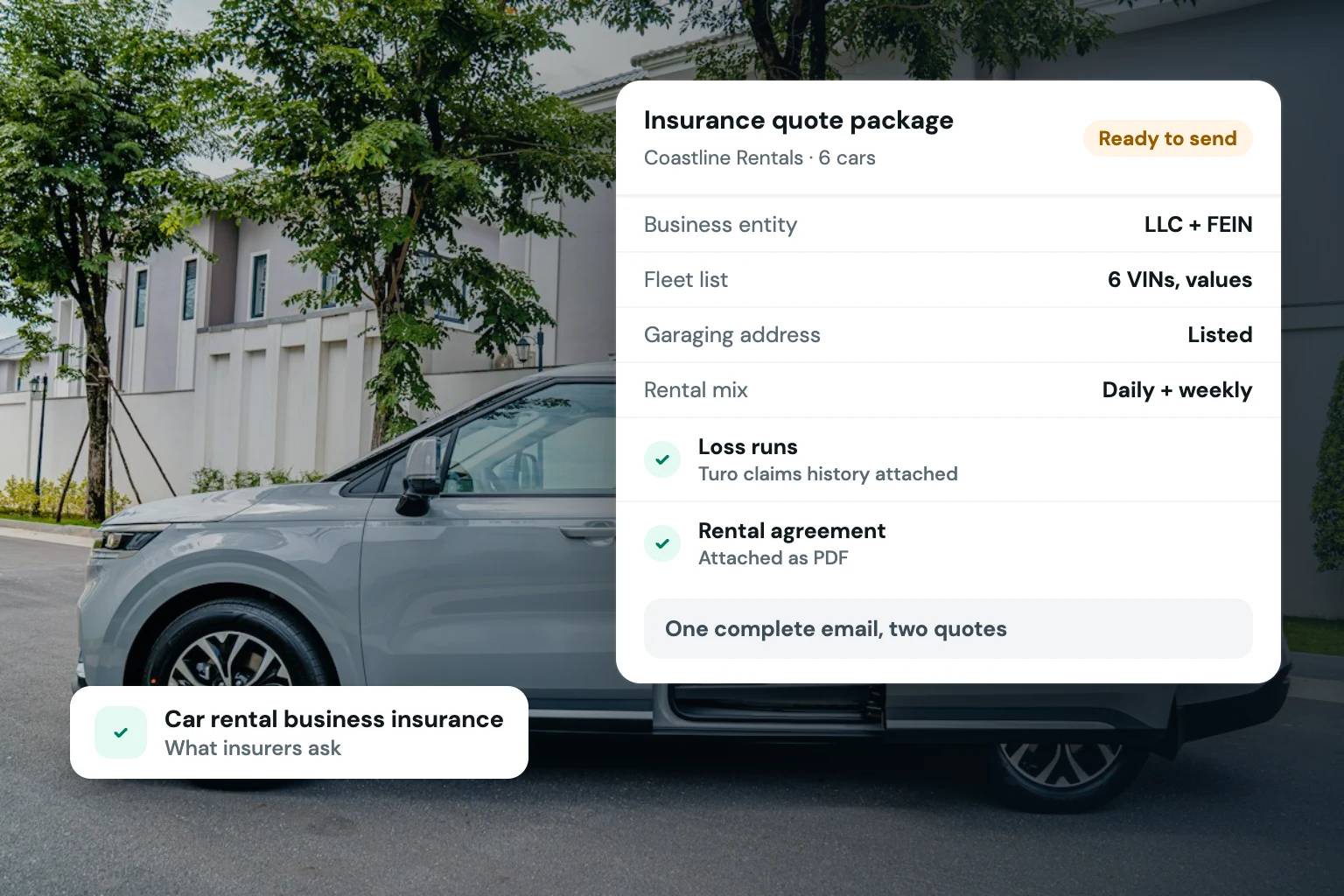
Rental programs underwrite the business, not just the cars. Have these ready before you call:
- A business entity. Many rental programs only write LLCs or corporations, with an FEIN, not individuals.
- Your fleet list. Year, make, model, VIN and value for every car. Programs often have a maximum vehicle age and a per-car value cap for physical damage.
- Where the cars are kept. The garaging address affects the price and whether you’re eligible at all.
- Who drives. Owners and employees who move cars, with their driving records.
- Your rental mix. Daily, weekly and monthly rentals, delivery, and whether any renters drive for rideshare or delivery apps. Livery and rideshare use is often excluded, so say so up front.
- Your loss history. Insurers call these loss runs. If you’ve hosted on Turo, ask Turo for your claims history; it counts.
- Your rental agreement and screening rules. Minimum renter age, ID checks, insurance checks and deposits. Have your agreement ready to attach; our free agreement builder lays out your own terms as a PDF.
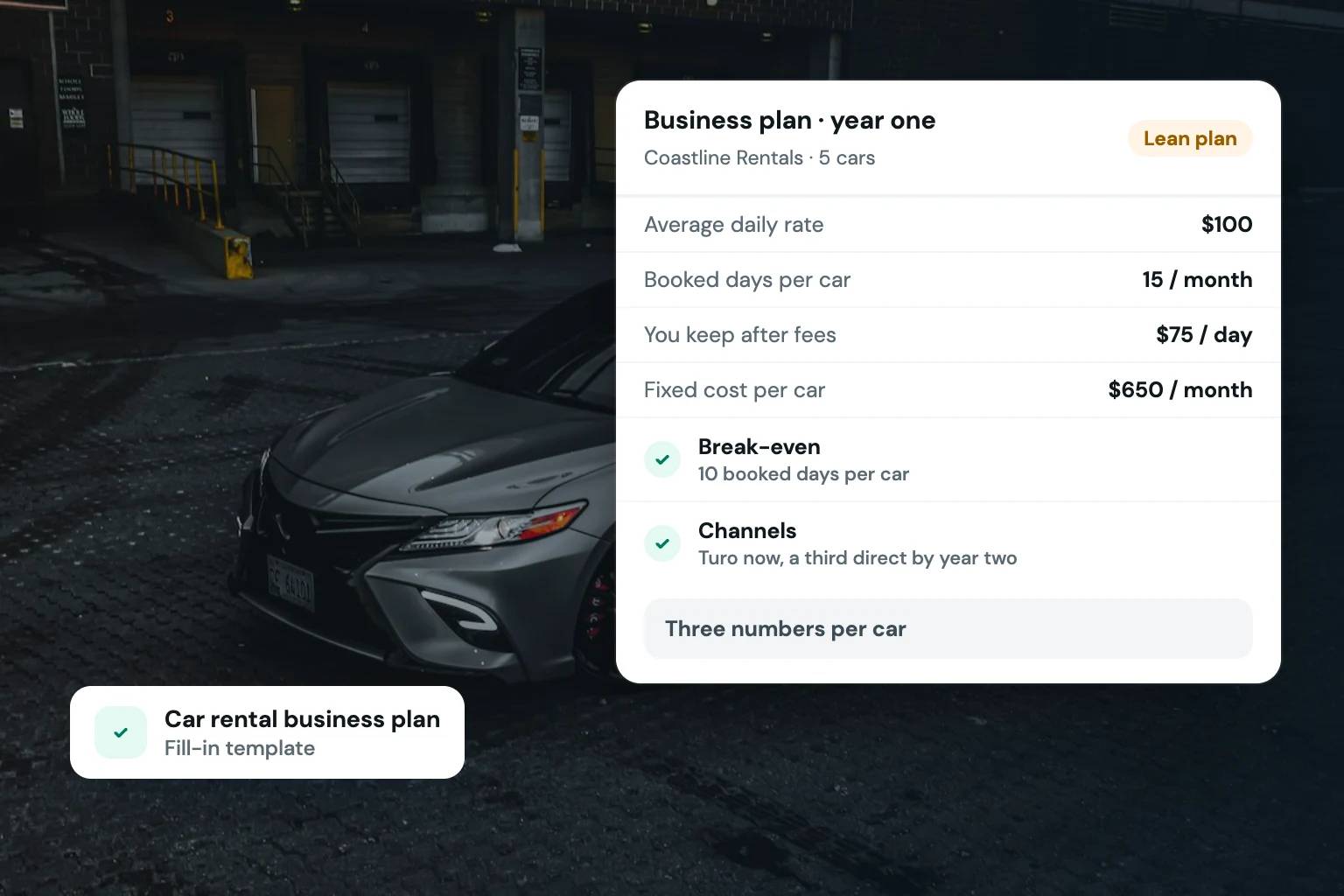
- A business plan, if you’re new. Some programs ask new ventures for a short plan. Our car rental business plan template covers what they want to see.
Insurers will also ask how you check renters. Being able to show that every renter’s ID was verified, their insurance was checked, a deposit was held and an agreement was signed answers those questions with records instead of promises. See ID verification for car rentals, verifying renter insurance and security deposits.
What drives the price
- The cars. Number of vehicles, their values and types. Exotics and high-value SUVs cost more to cover.
- Where you operate. State, city and the garaging address.
- Who you rent to. Age minimums, how you verify identity and driving history, and long-term or rideshare rentals.
- Your history. Prior claims, years in business, and your own driving records.
- The limits and deductibles you choose. Higher liability limits cost more; higher deductibles cost less up front and more when you claim.
We don’t quote premiums here because they vary too much by state, insurer and fleet to be useful. Once you have a real quote, divide it per car per month and add it to your business plan numbers. It’s usually one of the largest fixed costs per car.
How to get quoted
- Find an agent or broker who writes rental fleets. A general agent may only have personal or standard commercial auto. Some rental insurers also sell direct.
- Send a complete package. Everything in the checklist above, in one email. Incomplete applications are the most common reason quotes take weeks.
- Get at least two quotes, and compare the same coverage lines, limits and deductibles side by side.
- Read the exclusions for rideshare and delivery use, vehicle age, value caps, out-of-state trips and drivers under 25.
- Line up your renter rules with the policy. If the policy requires renters over 25 or a verified license, make that a checkout requirement, not a note in your agreement.
Where Fleetwire fits
Fleetwire doesn’t sell insurance. It enforces the renter rules your policy depends on: ID verification through Stripe Identity, insurance verification through Axle, card-hold deposits and e-signed agreements at checkout, with every step stored on the booking. Start a free trial, or read how to start a car rental business for where insurance fits in the bigger picture.
FAQ
What type of insurance do I need for a car rental business?
At minimum, a commercial auto policy written for rental use, with liability and physical damage coverage. Most rental businesses add general liability, and many add an umbrella policy and workers’ comp once they have employees. NerdWallet recommends working with an agent who specializes in fleets.
Can I use my personal auto insurance to rent out my car?
Usually not. Personal policies typically exclude renting the car to others for money. Turo’s protection only applies to Turo trips, so bookings you take yourself need their own policy. Our insurance for direct rentals guide covers the gap.
Do I need an LLC to start a car rental business?
It isn’t always legally required, but many commercial rental insurance programs only insure businesses, not individuals, so most operators form an LLC or corporation before applying. Ask an attorney and accountant what your state requires.
How much does car rental business insurance cost?
There’s no reliable single number. Premiums depend on your cars, location, renters, loss history, limits and deductibles, and they vary a lot between insurers. Get at least two quotes for your actual fleet, and build the premium into your per-car costs before you buy another car.
How much is $1,000,000 liability insurance a month?
It depends on the type of policy and the business. For a rental fleet, the liability limit is usually part of the commercial auto policy, priced per vehicle, so the only useful number is a quote for your fleet at the limit you want.
Does the Graves Amendment mean I don’t need liability insurance?
No. The Graves Amendment stops a rental owner being held liable just for owning the car, but it doesn’t cover your own negligence, such as skipped maintenance, and it doesn’t override state insurance requirements. You still need a policy.
Is having a car rental business worth it?
It can be, once insurance and the other per-car costs are counted. Put the premium into our rental car profit calculator with your rates and booked days to see what each car actually earns.
Sources
- Lancer Insurance: Car Rental Business Insurance (read November 20, 2026)
- NerdWallet: Best Insurance Companies for Car Rental Businesses, updated July 10, 2026 (read November 20, 2026)
- 49 U.S. Code § 30106, Rented or leased motor vehicle safety and responsibility (Cornell LII)
This article is general information, not insurance, legal or tax advice. Coverage and requirements vary by state and insurer. Fleetwire isn’t an insurance agency and doesn’t sell or recommend specific policies.